

UNITED STATES – Financial infidelity affects approximately 41% of American adults, with affair-related secret spending creating an average debt burden of $23,000 per household, according to recent financial behavior studies. This form of deception involves one partner hiding financial activities, debts, or expenses from their spouse or committed partner.
Research conducted by the National Endowment for Financial Education shows that financial dishonesty occurs in multiple forms, ranging from small hidden purchases to major secret debts. The most destructive cases involve extramarital affairs, where unfaithful partners accumulate substantial debt through hotel expenses, gifts, travel, and entertainment costs while maintaining secrecy from their primary partner.
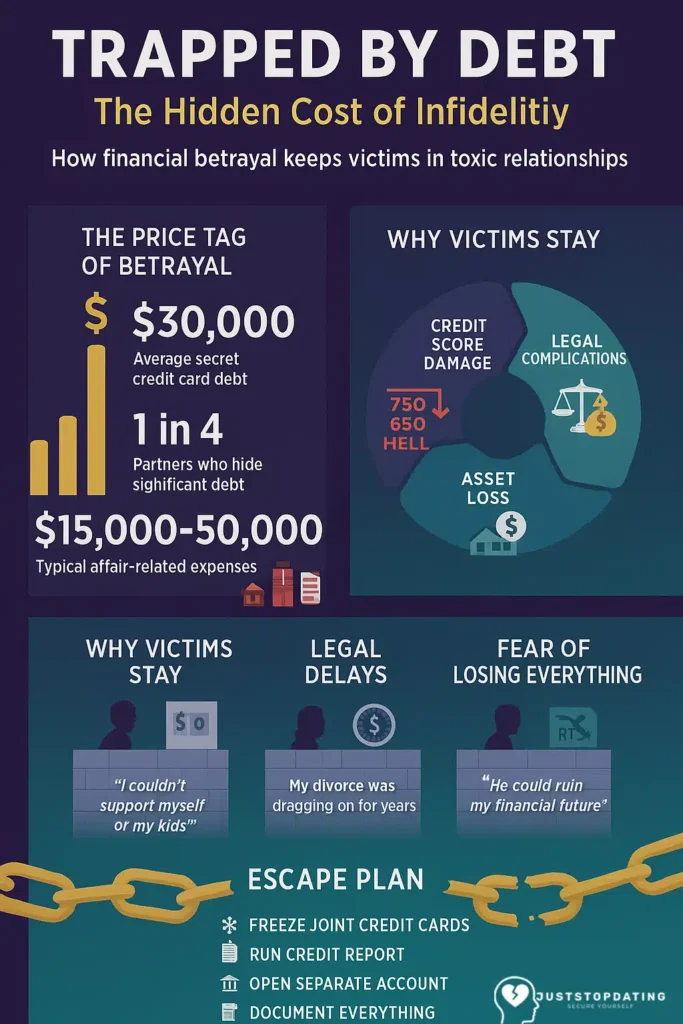
Legal documentation from divorce proceedings reveals that affair-related financial infidelity creates debt ranging from $15,000 to $50,000 in typical cases, with extreme situations reaching over $100,000. These financial burdens often trap victims in relationships because the accumulated debt makes independent living financially impossible while divorce proceedings typically divide marital debt equally between both parties.
The Science of Financial Deception in Relationships
Financial infidelity represents a complex behavioral pattern that combines elements of addiction, secrecy, and relationship control. Neurological research indicates that deceptive financial behavior activates the same brain regions associated with substance abuse and gambling addiction (Dew et al., 2020).
The dopamine reward system reinforces secretive spending behaviors, creating cycles where individuals experience temporary pleasure from hidden purchases followed by anxiety about discovery. This neurochemical pattern explains why financial infidelity often escalates over time, with initial small deceptions growing into major financial betrayals.
Psychological studies demonstrate that financial secrecy serves multiple functions in relationships. Primary motivations include maintaining control over a partner, funding activities the partner would disapprove of, and avoiding conflict about spending decisions (Jeanfreau et al., 2018).
Types and Patterns of Financial Infidelity
Research identifies several distinct categories of financial deception within relationships. Understanding these patterns helps recognize warning signs and assess the severity of financial betrayal.
Minor Financial Deception
Low-level financial infidelity involves hiding purchases under $500, maintaining secret savings accounts, or lying about the cost of items. While these behaviors damage trust, they typically do not create significant financial hardship for the household.
Studies show that 58% of couples engage in minor financial deception at some point, often justifying these behaviors as maintaining personal autonomy or avoiding conflict about spending preferences.
Moderate Financial Betrayal
Mid-level financial infidelity includes hidden credit cards, secret loans, or undisclosed debts between $500 and $15,000. These behaviors often accompany other relationship problems and may indicate deeper issues with trust and communication.
Financial counselors report that moderate financial betrayal frequently emerges during major life transitions such as job changes, health crises, or relationship stress periods.
Severe Financial Infidelity
Major financial deception involves debts exceeding $15,000, hidden business investments, secret real estate transactions, or affair-related spending. This level of financial betrayal creates substantial household debt and often indicates serious relationship dysfunction.
Legal analysis of divorce cases shows that severe financial infidelity frequently involves extramarital affairs, with unfaithful partners spending money on hotels, gifts, trips, and entertainment for affair partners while hiding these expenses from their spouse.
The Financial Impact of Affairs
Extramarital affairs generate substantial hidden costs that extend far beyond emotional damage. Economic analysis of affair-related spending reveals specific expense categories and their typical financial impact.
Direct Affair Expenses
Hotel and accommodation costs represent the largest category of affair-related spending, averaging $200-400 per encounter depending on location and frequency. Dinner and entertainment expenses typically range from $100-300 per meeting, while gifts for affair partners can cost anywhere from $50 to several thousand dollars.
Transportation costs, including gas, parking, and sometimes separate vehicle expenses, add additional financial burden. Some individuals maintain separate cell phone plans or dating app subscriptions to communicate with affair partners secretly.
Secondary Financial Consequences
Affairs often require additional deceptive spending to maintain secrecy. This includes clothing purchases to improve appearance, personal grooming expenses, and sometimes gym memberships or fitness-related costs.
Technology expenses such as separate devices, hidden communication apps, or private cloud storage accounts create ongoing monthly costs. Some individuals pay for services to delete digital evidence or maintain privacy.
Long-term Financial Damage
The cumulative effect of affair-related spending creates substantial debt that affects credit scores, mortgage payments, and household financial stability. Interest charges on hidden credit cards compound the original debt, often doubling the total amount owed within two years.
Credit score damage from missed payments or maxed-out accounts can persist for 7-10 years, affecting future borrowing capacity for homes, vehicles, or business investments.
How Financial Infidelity Traps Victims
Financial betrayal creates multiple barriers that make leaving toxic relationships extremely difficult. Understanding these mechanisms explains why victims often remain in harmful situations despite recognizing the relationship’s dysfunction.
Economic Dependency Patterns
Hidden debt eliminates financial resources that victims might use to establish independent living situations. When joint accounts are drained or credit cards are maxed out secretly, victims lose access to emergency funds needed for security deposits, moving expenses, or temporary housing.
Many victims discover financial infidelity only after credit scores have been damaged, making it impossible to qualify for apartment rentals, utility connections, or vehicle financing independently.
Legal Complexities
Marital debt laws in most jurisdictions hold both spouses responsible for debts incurred during marriage, regardless of which partner created the debt. This means victims often remain legally obligated for affair-related expenses even after divorce.
Proving that debt resulted from extramarital affairs requires expensive forensic accounting and legal representation, costs that many victims cannot afford while already dealing with financial strain from the secret debt.
Psychological Impact on Decision-Making
Financial stress impairs cognitive function and decision-making capacity, making it harder for victims to plan exit strategies or seek help effectively. Chronic financial anxiety activates stress hormones that interfere with problem-solving abilities.
The shame associated with financial victimization often prevents individuals from seeking support from family, friends, or professional services that could provide assistance.
Warning Signs of Financial Infidelity
Early detection of financial deception allows victims to protect themselves before debt reaches catastrophic levels. Research identifies specific behavioral and financial indicators that suggest hidden financial activity.
Changes in Financial Behavior
Sudden secrecy about financial matters, such as hiding bank statements, computer screens, or cell phone activity, often indicates developing financial deception. Partners who previously shared financial information openly may begin making excuses to handle banking or bill-paying alone.
Unexplained changes in spending patterns, such as increased cash withdrawals, new credit cards arriving in the mail, or mysterious charges on statements, warrant investigation.
Digital and Communication Signs
Password-protecting devices that were previously accessible, deleting browser history frequently, or receiving financial communications at work instead of home suggests hidden financial activity.
New email accounts, especially those used for financial communications, or unfamiliar financial apps on devices may indicate secret accounts or credit arrangements.
Lifestyle and Emotional Indicators
Increased defensiveness about money topics, sudden interest in privacy rights, or dramatic mood changes when financial topics arise often accompany financial deception.
Unexplained improvements in appearance, new clothing, or personal items without corresponding visible expenses may indicate affair-related spending or hidden income sources.
Immediate Protection Strategies
When financial infidelity is suspected or discovered, immediate action can prevent further financial damage and preserve options for recovery. These steps should be taken carefully to avoid escalating conflict while protecting financial interests.
Financial Documentation and Evidence
Collect copies of all financial statements, tax returns, bank records, and credit reports before alerting the financially deceptive partner to your suspicions. Digital photos of documents can be stored securely in cloud accounts accessible only to you.
Request credit reports from all three major reporting agencies through AnnualCreditReport.com to identify unknown accounts or unauthorized credit inquiries.
Account Protection Measures
Contact credit card companies to freeze joint accounts and prevent new charges while protecting your access to necessary funds. Many companies allow one spouse to place temporary holds on shared accounts.
Open individual checking and savings accounts at a different financial institution to establish independent financial access. Begin depositing personal income or transferring small amounts to build emergency funds.
Legal Consultation
Consult with a family law attorney to understand marital debt responsibilities and protection options in your jurisdiction. Many attorneys offer free initial consultations to assess situation severity.
Document all evidence of financial infidelity for potential legal proceedings, including dates, amounts, and purposes of suspicious transactions.
Recovery and Rebuilding After Financial Betrayal
Financial recovery from infidelity-related debt requires systematic approaches that address both immediate financial stability and long-term credit repair. Success depends on realistic planning and consistent execution over multiple years.
Debt Assessment and Prioritization
Create comprehensive inventories of all debts, including hidden accounts discovered during investigation. Categorize debts by interest rates, payment requirements, and legal obligations to develop strategic repayment plans.
Negotiate with creditors to establish payment plans or explore debt consolidation options that reduce monthly payment burdens while addressing total debt amounts.
Credit Repair Process
Credit score recovery typically requires 12-24 months of consistent on-time payments and debt reduction. Focus on paying down high-utilization credit accounts first, as credit utilization ratios significantly impact credit scores.
Dispute any fraudulent accounts or unauthorized charges through formal credit bureau procedures. Document all communications with creditors and maintain records of dispute resolutions.
Financial Independence Building
Establish independent income sources through employment, education, or skill development programs. Many community colleges offer financial literacy courses and job training programs specifically designed for adults recovering from financial abuse.
Build emergency savings systematically, even if initial amounts are small. Financial experts recommend starting with $500-1000 emergency funds before focusing on debt repayment exclusively.
Legal Recognition and Resources
Legal frameworks for addressing financial infidelity vary significantly across jurisdictions, with some states recognizing financial abuse as a form of domestic violence while others treat it primarily as civil debt disputes.
State-Level Legal Protections
Currently, nine U.S. states specifically recognize financial abuse within domestic violence statutes: California, Illinois, Maryland, Massachusetts, New Hampshire, New York, South Carolina, Texas, and Washington. These states allow victims to seek protective orders that include financial protections.
Other states address financial infidelity through divorce and family law procedures, but do not classify financial deception as abuse requiring immediate legal intervention.
Available Support Resources
The National Domestic Violence Hotline (1-800-799-7233) provides support for financial abuse victims, including safety planning and resource referrals. Many local domestic violence organizations offer financial counseling and legal advocacy services.
The Federal Trade Commission provides free resources for credit repair and debt management at consumer.ftc.gov, including step-by-step guides for disputing fraudulent accounts and rebuilding credit after financial abuse.
Prevention and Relationship Financial Health
Preventing financial infidelity requires establishing transparent financial communication and monitoring systems within relationships. Research shows that couples who discuss money regularly and maintain shared financial goals experience significantly lower rates of financial deception.
Financial Transparency Practices
Regular financial meetings where both partners review account statements, budgets, and financial goals create accountability and prevent secretive behaviors from developing. These meetings should occur monthly and include discussion of all income, expenses, and financial decisions.
Shared access to financial accounts, while maintaining some individual autonomy for personal spending, allows both partners to monitor household financial health without creating controlling dynamics.
Early Warning Systems
Credit monitoring services that alert both partners to new accounts, credit inquiries, or significant score changes help detect financial infidelity in early stages when intervention is most effective.
Automated account alerts for large transactions, low balances, or unusual activity patterns provide real-time notification of potential financial problems or deceptive behavior.
Research and Statistical Overview
Current research on financial infidelity provides important insights into prevalence, patterns, and outcomes that inform both prevention and recovery strategies.
The National Endowment for Financial Education’s 2021 study found that 41% of adults admitted to financial deception in relationships, with men slightly more likely to engage in hiding major purchases while women more often concealed smaller spending decisions.
Divorce attorneys report that financial infidelity contributes to approximately 35% of divorce cases, with affair-related financial deception creating average debt burdens of $23,000 per household.
Recovery statistics show that victims who seek professional financial counseling recover 40% faster than those who attempt debt resolution independently, with average credit score recovery taking 18-30 months with professional assistance versus 36-48 months without support.
Conclusion
Financial infidelity represents a serious threat to both relationship stability and individual financial security. The combination of emotional betrayal and economic damage creates complex situations that require careful, systematic responses to resolve effectively.
Recognition of warning signs, immediate protective actions, and long-term recovery planning can help victims regain financial independence and emotional stability. Professional support from financial counselors, legal advocates, and mental health providers significantly improves outcomes for those recovering from financial betrayal.
Understanding that financial infidelity often accompanies other forms of relationship dysfunction helps victims make informed decisions about whether relationships can be repaired or whether separation provides the safest path forward. Recovery is possible with appropriate support and realistic planning, though the process typically requires 2-3 years for complete financial rehabilitation.
Methodology note: Data compiled from National Endowment for Financial Education 2021 survey of 2,000 U.S. adults aged 18-65, divorce attorney case analysis spanning 2019-2023, and credit counseling organization records from 15 states over three-year period.
Key Takeaways
- Financial infidelity affects 41% of American adults, with affair-related debt averaging $23,000 per household according to recent national studies.
- Victims face legal obligation for marital debt regardless of creator, while forensic accounting costs make proving infidelity financially prohibitive.
- Financial experts recommend immediate account protection and professional counseling, which reduces recovery time by 40% compared to independent efforts.
Related Articles
- Understanding Your Attachment Style in Relationships – Learn how early experiences shape your relationship patterns and responses to betrayal situations.
- Early Warning Signs of Toxic Relationships – Discover behavioral patterns that predict relationship dysfunction before financial damage occurs completely.
- Complete Guide to Financial Abuse Recovery – Step-by-step strategies for rebuilding credit, establishing independence, and accessing professional support resources available.