
Avoidant Attachment
| |
|---|---|
| Full Name | Avoidant (Insecure-Dismissive) Attachment |
| Core Characteristics | Emotional suppression, intimacy avoidance, discomfort with dependence, self-reliance |
| Developmental Origin | Arises from early caregiving marked by rejection, emotional unavailability, or punishment for expressing needs |
| Primary Behaviors | Downplaying closeness, avoiding vulnerability, disengaging during conflict, prioritizing independence |
| Role in Behavior | Reduces perceived emotional risk, but limits relational depth and emotional attunement |
| Associated Traits | Low anxiety, high avoidance, emotional suppression, discomfort with emotional expression |
| Contrasts With | Anxious attachment, secure attachment, disorganized attachment |
| Associated Disciplines | Developmental psychology, interpersonal neurobiology, trauma therapy, couples counseling |
| Clinical Relevance | Linked to intimacy struggles, emotional detachment, commitment avoidance, and relational burnout |
| Sources: Ainsworth (1978), Bowlby (1988), Mikulincer & Shaver (2007) | |
Other Names
Dismissive attachment, insecure-avoidant attachment, deactivating attachment pattern
Definition
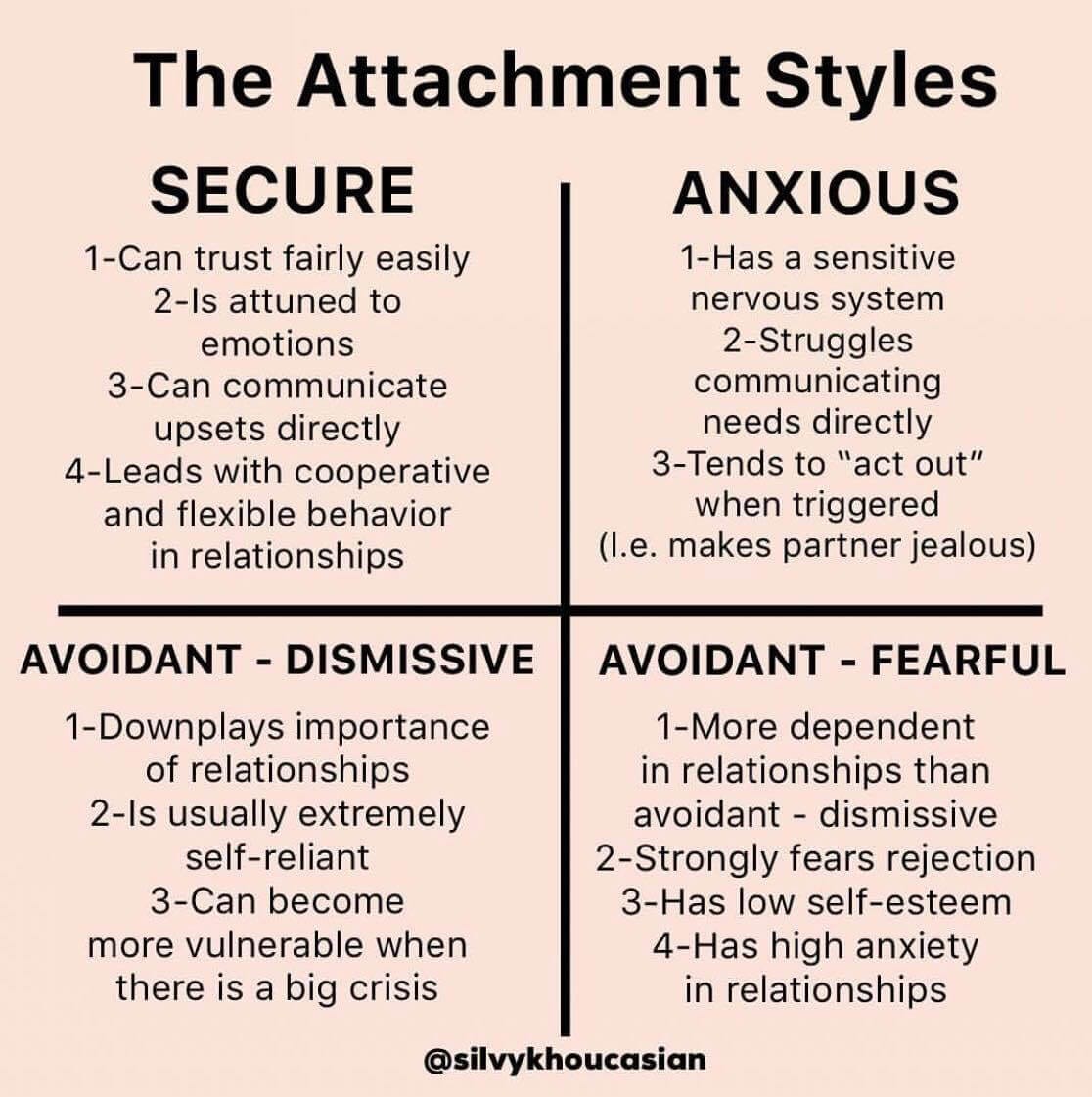
Avoidant attachment refers to a relational pattern in which individuals downplay emotional needs and reject closeness to preserve autonomy. Often learned in childhood, this style persists into adulthood as discomfort with intimacy, difficulty expressing vulnerability, and a tendency to detach when threatened.
History of Avoidant Attachment
1970s: Ainsworth’s Strange Situation
Mary Ainsworth’s *Strange Situation* experiments (1978) identified avoidant infants who showed indifference upon separation and avoided caregivers upon reunion. These children learned that expressing distress would be met with rejection or indifference.
1980s–1990s: Adult Attachment Expansion
Following Bowlby’s attachment theory, Hazan and Shaver (1987) mapped infant patterns onto romantic styles. Avoidantly attached adults struggled with closeness, preferred independence, and often resisted emotional dependence.
2000s: Cognitive-Affective Modeling
Researchers explored deactivation strategies like psychological defenses that down-regulate emotional expression. Bartholomew and Horowitz (1991) categorized avoidant individuals into dismissive and fearful types based on internal models of self and others.
2010s–2020s: Cultural and Neurobiological Refinements
Cross-cultural studies revealed that avoidant attachment appears more frequently in Western, individualistic societies. Neuroscientific work showed reduced limbic activation during emotional tasks in avoidant individuals (Vrtička et al., 2012).
2023–2025: DatingApps and Emotional Withdrawal
Modern research links avoidant attachment to ghosting, ambiguous communication, and superficial engagement in dating apps (LeFebvre et al., 2023). The rise of emotionally distant relational norms has renewed interest in avoidant attachment as both a clinical concern and cultural trend.
Mechanism
- Emotional deactivation: People with avoidant tendencies ignore their need for closeness to avoid being hurt.
- Internal working models: They believe others can’t be trusted and that they must depend only on themselves.
- Proximity inhibition: Being too close to others causes stress, making them pull away.
Types of Avoidant Attachment
- Dismissive Avoidant (“I don’t need anyone”): These individuals appear extremely self-sufficient, often denying their need for relationships. They may come across as aloof or emotionally distant. Clinical markers: High scores on attachment avoidance scales, tendency to devalue relationships, often paired with inflated self-image (Bartholomew & Horowitz, 1991).
- Fearful Avoidant (“I want closeness but it’s unsafe”): Unlike dismissive types, they secretly desire connection but avoid it due to fear of rejection. Often anxious underneath their avoidant exterior. Clinical markers: High both avoidance and anxiety scores, internal conflict about relationships (Fraley & Shaver, 2000).
- Hostile-Dependent Avoidant (“Push-pull relationships”): Alternates between seeking and rejecting closeness, creating unstable relationship patterns. May punish partners for getting too close. Clinical markers: Disorganized attachment features, often linked to childhood trauma (Main & Solomon, 1986).
- Compulsively Self-Reliant Avoidance (“I’ll do everything myself”): Takes independence to extremes, refusing help even when needed. Often perfectionistic and workaholic. Clinical markers: Correlated with obsessive personality traits, high need for control (Mikulincer & Shaver, 2007).
Psychology of Avoidant Behavior
- Discomfort with vulnerability: Avoidant individuals often see emotional openness as a weakness and avoid sharing feelings.
- Intimacy aversion: Close relationships (physical or emotional) can feel overwhelming or unsafe, leading to withdrawal.
- Overemphasis on independence: They pride themselves on self-reliance, even if it harms relationships.
- Emotion suppression: Struggles to recognize or express personal needs, especially during conflicts or bonding moments.
Neuroscience of Avoidant Attachment
- Emotional “shut-off” mode: Avoidant people’s brains react less to emotional closeness, like a dimmer switch on feelings.
Hypoactivation of the limbic system: Reduced amygdala (fear center) and anterior cingulate cortex (ACC; emotion regulator) response to attachment cues. - Overthinking emotions: They rely heavily on logic to suppress emotions, especially in conflicts.
Increased PFC engagement: Prefrontal cortex (cognitive control hub) overrides limbic-driven emotional expression. - Low “bonding hormone” levels: Their brains release less oxytocin, making trust and connection feel unnatural.
Low oxytocin reactivity: Blunted response to bonding-related stimuli, impairing secure attachment. - Automatic distance-seeking: Their nervous system calms itself by avoiding closeness—like an internal “mute button” on intimacy.
- Deactivation circuits: Default mode network (DMN) downregulates threat/arousal responses to proximity.
Epidemiology
- 1 in 4 babies avoid closeness instinctively: Studies tracking infant behavior show that about 25% of babies in Western countries consistently avoid seeking comfort from caregivers when distressed. Including turning away instead of crying for help. Ainsworth’s Strange Situation (1978): 20–25% of infants in Western samples exhibit avoidant attachment (Type A), characterized by minimal distress upon separation and avoidance of caregiver upon reunion.
- Adults hide it even more: This pattern often continues into adulthood, but many don’t realize they have it—they just think “I’m independent” and avoid therapy or deep relationships. Underreporting bias: Adult prevalence mirrors infant rates (~25%), but assessment is complicated by low help-seeking behavior (Mikulincer & Shaver, 2016) and reliance on self-report measures vulnerable to response distortion.
- Rooted in upbringing or culture: People are more likely to develop this if their parents dismissed their emotions (“Stop crying!”) or if they grew up in cultures that prioritize self-reliance over community. Etiological factors: Elevated in individuals with caregivers who consistently rejected emotional needs (Main & Solomon, 1990) and in individualistic societies (e.g., U.S., Germany) where autonomy is emphasized over interdependence (van IJzendoorn & Kroonenberg, 1988).
Media Depictions
Characters with anxious-avoidant attachment frequently appear in media, exhibiting patterns of emotional withdrawal, fear of intimacy, and relationship push-pull dynamics.
Film
- Good Will Hunting (1997): Will Hunting (Matt Damon) portrays avoidant attachment through emotional numbing and pushing away therapist Sean Maguire (Robin Williams) and girlfriend Skylar (Minnie Driver) despite genuine connections.
- Her (2013): Theodore Twombly (Joaquin Phoenix) demonstrates anxious-avoidant patterns through emotional withdrawal from ex-wife Catherine (Rooney Mara) and an unconventional relationship with AI Samantha (Scarlett Johansson).
- Eternal Sunshine of the Spotless Mind (2004): Joel Barish (Jim Carrey) and Clementine Kruczynski (Kate Winslet) cycle through anxious-avoidant dynamics, with Joel exhibiting avoidance through memory-erasure attempts and Clementine exhibiting fearful-avoidant tendencies.
Television
- Mad Men (2007-2015): Don Draper (Jon Hamm) exemplifies dismissive-avoidant attachment through secrecy, compartmentalization of relationships, and emotional withdrawal from wives Betty (January Jones) and Megan (Jessica Paré).
- The Crown (2016-2023): Prince Philip (played by Matt Smith and Tobias Menzies) displays avoidant traits through emotional reserve and difficulty expressing vulnerability to Queen Elizabeth II (Claire Foy/Olivia Colman).
- BoJack Horseman (2014-2020): BoJack (Will Arnett) demonstrates fearful-avoidant patterns through self-sabotage and pushing away Diane Nguyen (Alison Brie) despite their emotional connection.
Literature
- Norwegian Wood (1987): Toru Watanabe (Haruki Murakami’s protagonist) exhibits avoidant behaviors through emotionally distant relationships with Naoko and Midori, reflecting attachment trauma.
- Normal People (2018): Connell and Marianne (Sally Rooney’s characters) cycle through anxious-avoidant dynamics, with Connell’s emotional withdrawal triggering Marianne’s relationship anxiety.
- Wuthering Heights (1847): Emily Brontë’s Heathcliff demonstrates fearful-avoidant attachment through destructive behavior toward Catherine, blending intense longing with emotional cruelty.
Visual Art
- The Lovers (1928, René Magritte): The shrouded faces in this surrealist painting visually represent emotional barriers in intimacy, mirroring avoidant attachment’s fear of true connection.
- Fountain (1917, Marcel Duchamp): This readymade artwork’s deliberate emotional detachment from traditional artistry reflects avoidant tendencies in creative expression.
- Self-Portrait with Thorn Necklace and Hummingbird (1940, Frida Kahlo): Kahlo’s juxtaposition of pain and restraint in this work embodies the push-pull dynamic of anxious-avoidant attachment.
Poetry
- “This is My Letter to the World” (1890, Emily Dickinson): The poem’s themes of isolated communication and withheld intimacy exemplify literary avoidant attachment.
- “The Love Song of J. Alfred Prufrock” (1915, T.S. Eliot): Prufrock’s paralyzing self-doubt and emotional withdrawal (“Do I dare disturb the universe?”) capture anxious-avoidant indecision.
- “Sonnet 139” (1609, William Shakespeare): The speaker’s plea “O! call not me to justify the wrong” demonstrates avoidant conflict evasion in relationships.
Current Research Landscape
Avoidant attachment remains a focus in developmental psychology, romantic relationship studies, and neurobiology. Current topics include:
- Attachment-based therapies for emotional numbing
- The role of avoidant traits in modern dating disengagement
- Cross-cultural differences in avoidant norms and outcomes
- Alice in AI-Wonderland: digital dyad, distorted reality
- Effectiveness of Using a Popular Media Theme in Emergency Medicine Simulation
- Defining Uroplastics as a Collaborative Discipline at the Interface of Urology and Plastic Surgery
- Gamification in health education: a mini-review of engagement strategies for the smartphone generation
- Large Language Models for Cardiac MRI Diagnosis Based on Standardized Text Descriptions
FAQs
What are the traits of avoidant attachment?
People with avoidant attachment prioritize independence, often appearing emotionally distant or uncomfortable with vulnerability which is a pattern rooted in deactivating strategies (Mikulincer & Shaver, 2007) where they suppress attachment needs. Neurobiologically, this correlates with reduced limbic system activation (Vrtička et al., 2012) during intimacy cues, measurable through high avoidance scores on the Experiences in Close Relationships (ECR) scale.
What is an avoidant attached person like?
They often present as hyper-self-sufficient, avoiding reliance on others—a behavioral signature of the low-anxiety/high-avoidance quadrant (Brennan et al., 1998). Their blunted oxytocin response (Striepens et al., 2011) to bonding behaviors and prefrontal cortex dominance during emotional processing (Suslow et al., 2019) explain why they cognitively override emotional urges for closeness.
What pushes an avoidant away?
Avoidants withdraw when feeling autonomy threats—like pressure for quick intimacy—because such scenarios activate their behavioral inhibition system. Partner behaviors that increase cognitive dissonance (e.g., expressed neediness) trigger deactivating strategies (Fraley & Shaver, 2000), causing them to emotionally disengage as a protective mechanism.
What is avoidant attachment in love?
Romantically, they favor practical interdependence over emotional fusion (Feeney, 2007), often exhibiting distancing behaviors during conflict (Pistole, 1989). Their reduced neural reward activation during intimacy (DeWall et al., 2012) aligns with pragma/ludus love styles (Lee, 1973)—preferring logical or playful connections over deep emotional bonds.