Penis size concerns didn’t appear overnight or develop naturally in all human societies. Instead, these worries formed through a complicated mix of historical events like colonialism, scientific studies, advertising, and social pressures that built up over hundreds of years. Understanding this history helps explain why some cultures worry intensely about penis size while others focus on completely different aspects of masculinity and attractiveness.
Ancient Greek Views on Penis Size: The Smaller, The Better
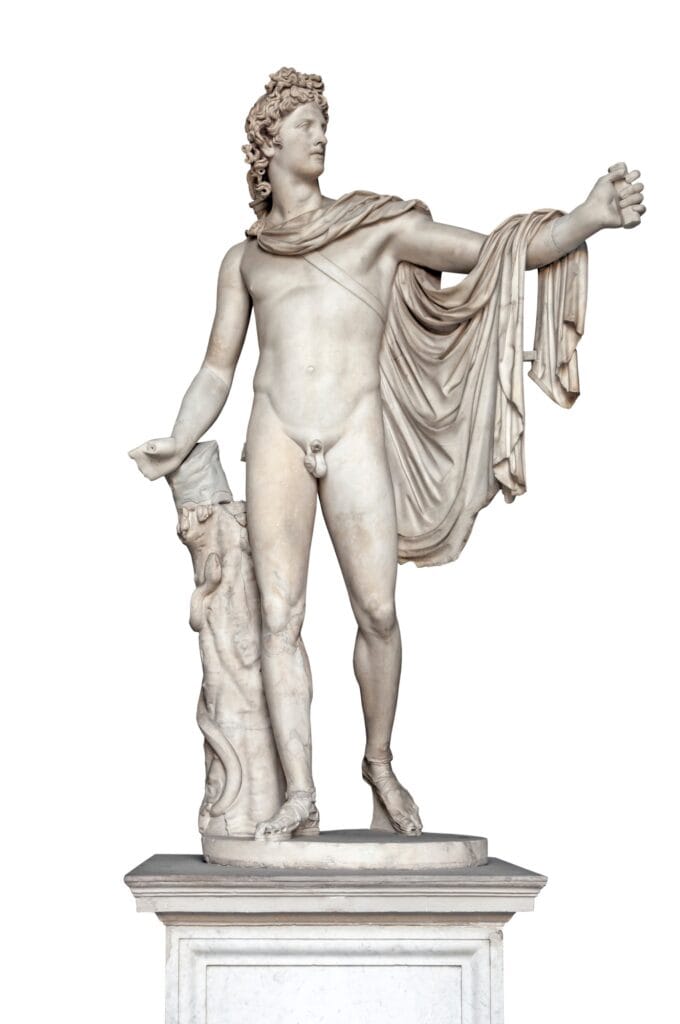
Archaeological evidence and historical writings show that ancient civilizations had widely varying attitudes toward penis size. In ancient Greece, smaller penises were associated with intelligence, self-control, and civilization. Greek statues of gods and heroes typically depicted modest-sized genitals because larger ones were connected with barbarism, lack of restraint, and animal-like behavior.
Roman culture was more complex, with different attitudes in public art versus private contexts. While official sculptures followed Greek conventions showing smaller sizes, Roman homes often contained fertility symbols and decorative items featuring larger penises. These were considered symbols of prosperity and protection rather than personal inadequacy indicators. The Roman penis was the constant subject of artistic and everyday representations, appearing in different shapes and forms, from lamps and jewelry to dishes.
Historian Paul Chrystal notes that “the small penis was consonant with Greek ideals of male beauty” and “was a badge of the highest culture and a paragon of civilization”. In Greek comedy, fools routinely sported large genitals, described as “the sign of stupidity, more of a beast than a man”.
Why is Penis Size Racialized?
European colonial expansion from the 15th to early 20th centuries created sustained contact between Europeans and diverse populations in Africa, Asia, Oceania, and the Americas. Colonial officials, missionaries, and explorers often recorded physical descriptions of the men they encountered, including genital size. These observations were framed through European norms, sometimes using exaggerated or selective descriptions, and were frequently published in travel accounts, missionary reports, and anatomical studies.
In the 18th and 19th centuries, emerging scientific fields such as anthropology and comparative anatomy incorporated these accounts into racial classification systems. Without standardized measurements, claims about penis size became part of broader typologies linking physical traits to intelligence, morality, and civilization. European bodies were used as the baseline, and other groups were portrayed as larger or smaller in ways that aligned with prevailing racial stereotypes.
Early Scientific Studies Created False Standards
The first significant study to examine penis size was conducted by William Schonfeld and Gilbert Beebe in 1942 in New York City. They examined the genitals of 1,480 male subjects, ranging in age from infants to 25 years old, to determine growth patterns of the penis and testicles. After much analysis, they concluded that measurement of neither the flaccid nor the erect penis could be reliably reproduced, so they created a new approach: measuring the flaccid but stretched penis.
Alfred Kinsey’s research in the 1940s used a different approach entirely. When Kinsey conducted his study, researchers simply gave men stamped postcards. Each participant held a postcard against his erect penis, marked how long it was, and mailed the results back. This self-reporting method was highly unreliable, yet Kinsey’s findings became widely cited despite their methodological limitations.
From the 1970s onward, studies began using more controlled protocols: standardized room temperature, rigid rulers pressed to the pubic bone, private settings, and repeated measurements by trained examiners. Importantly, later research drew from broader and more diverse samples.
The most comprehensive meta-analysis to date (Veale et al., 2015) combined 20 studies with 15,521 men aged 17–91. Samples came from the United States, Europe (UK, Italy, Germany, France, Turkey), Africa (Nigeria, Egypt, South Africa), Asia (South Korea, India, Israel), and South America (Brazil). Most participants were either volunteers in clinical settings or patients undergoing urological examination. Ethnic representation roughly reflected each country’s population at the time of the study. Under standardized conditions, the pooled averages for penis size were:
- Erect length: 13.24 cm (5.21 in)
- Flaccid length: 9.16 cm (3.61 in)
- Flaccid stretched length: 13.24 cm (5.21 in)
The data showed minimal size differences between populations when measured consistently have directly challenged racialized size stereotypes rooted in flawed early science. However, the views of men regarding penis size are vastly different.
How Do Men Around the World Feel About Penis Size?
When researchers combined measurement data with attitudinal surveys from the same or comparable populations, key patterns emerged (Mostafaei et al, 2025):
- North America & Western Europe: Men expressed the highest rates of penis size-related anxiety, often citing pornography and cultural emphasis on sexual performance.
- Parts of Africa & Latin America: While penis size was sometimes associated with virility, size anxiety was less commonly reported unless men were exposed to Western media or global pornography.
- East & South Asia: Surveys found more moderate levels of penis anxiety but higher prevalence of size-related advertising and surgical marketing, suggesting external influence from globalized views rather than local concern.
These findings suggested that even though modern measurement debunks large racial differences, the belief in size hierarchies persists, shaped by colonial-era stereotypes, amplified by pornography, and now reinforced by global media circulation.
How Porn & Penis Products Exploited Male Insecurities
Although penis size appears to be very similar across regions, the growth of mass media and commercial advertising has created new opportunities to promote products by making men feel inadequate about their bodies. Companies began selling pills, devices, and treatments claiming to increase penis size, often using before-and-after testimonials and pseudoscientific explanations to convince customers that larger was better and that their products could deliver results.
Adult magazines and later pornographic films provided new visual standards that influenced men’s expectations about penis size. These media consistently featured performers selected for above-average physical characteristics, creating unrealistic reference points for ordinary men. The combination of commercial products promising enlargement and visual media showing exaggerated examples created a feedback loop that intensified penis size anxiety.
Male Peer Interactions Increased Penis Size Envy
Male peer interactions haven’t made things easier for most men. In settings like schools, sports teams, and military service created opportunities for direct comparison and commentary about penis size. Locker rooms, communal showers, and barracks living arrangements meant that men regularly saw each other naked, leading to informal ranking and teasing based on physical differences. These social dynamics reinforced the idea that penis size was an important measure of masculine status.
Research in gender studies has documented how male peer groups use body-related commentary as a way to establish social hierarchies. Studies show that peer pressure about physical appearance often starts in adolescence and continues throughout adult life, with men policing each other’s masculinity through comments about bodies, behavior, and sexual performance.
The development of slang terms, jokes, and informal ranking systems around penis size became embedded in male social culture in many Western societies. These informal social practices spread ideas about what was considered normal, desirable, or inadequate, often based on limited information and cultural assumptions rather than accurate knowledge about human biological variation.
Dating Apps Accelerate Penis Size Anxiety
Even after men are years outside of the locker room, they’re faced with competition from their peers on dating apps and forums. Since 2020, digital communication has been attributed to the acceleration of penis size anxiety. Online forums, dating websites, and social media platforms created new ways for people to discuss, compare, and share information about bodies and sexual experiences. This digital connectivity meant that cultural attitudes developed in one part of the world could quickly influence people everywhere.
Some dating apps and websites sometimes include questions or discussions about physical preferences, including penis size, making these topics more explicit in relationship formation. The ability to browse profiles and make selections based on stated preferences created new pressures for men to meet certain standards or worry about being rejected based on physical characteristics they couldn’t control.
Bigger Penises Were Associated With Positive Personality Traits
In 2022, researchers at Texas A&M University investigated how penis size influenced perceptions of personality and sexual ability. The study surveyed 106 participants, 80% of whom were women, with an average age of 21 years. The sample was racially diverse, including 38.7% African American, 19.8% Hispanic/Latino, and 31.1% White participants. Each participant viewed 24 photographs of white, circumcised penises that had been collected from Reddit.
The study’s strength was that it directly examined how judgments were formed when only penis images were provided, eliminating other personal or social cues. The standardized image presentation meant that all participants evaluated the same material under the same conditions. While the results of the study revealed that participants tended to associate greater penis length and girth with more positive personality traits and higher sexual skill. The results are summarized in Table 1.
| Features | Survey Responses | Ratings |
|---|---|---|
| Participant Gender & Sexual Orientation | Only one difference: straight participants estimated a higher number of sexual partners for the men depicted in the images from Reddit | Straight participants gave higher partner counts |
| Overall Shape (“Prototypicality”) | Penises rated as more typical in shape were also rated higher on attractiveness, friendliness, sexual skill, activity level, and openness | More “typical” shape |
| Girth (Thickness) | Thicker penises were rated higher on attractiveness, sociability, sexual skill, willingness to please, openness, and number of partners; thinner penises were rated higher on nervousness | Thicker |
| Length | Longer penises were rated higher on attractiveness, sociability, carefulness, openness, sexual skill, willingness to please, and number of partners; shorter penises were rated higher on nervousness | Longer |
| Pubic Hair | Long pubic hair was associated with lower ratings of sociability, openness, and partner number; trimmed hair received the highest ratings for attractiveness, sexual skill, and willingness to please; shaved was similar to trimmed on most measures | Trimmed |
Table 1. Perceptions of Personality and Sexual Traits Based on Penis Shape, Girth, Length, and Pubic Hair Table shows summary of survey responses from adult participants (n = 106, 80.2% women) of varied gender identities and sexual orientations, rating photographic stimuli of male genitalia on personality and sexual trait descriptors. Features assessed included penis shape, girth, length, and pubic hair style. Ratings represent perceived trait associations based on a 7-point Likert-type scale. Data are self-reported perceptions and are presented without inference.
What Women Actually Want: Larger Penises for One Night Stands; Smaller for Long-Term
A 2015 study at the University of California, Los Angeles, led by Dr. Nicole Prause, used 3D-printed penis models to examine women’s size preferences. The models, made from smooth blue plastic, ranged from 4.0 to 8.5 inches in length and 2.5 to 7.0 inches in circumference, with 33 sizes chosen to represent realistic variation.
The study included 75 women aged 18–65 (average age 24.7), all sexually attracted to men. The sample was racially diverse: 37% White, 32% Asian, 21% Hispanic, and 13% Black. Most participants were sexually experienced, although 15 reported never having had intercourse. Nearly 55% had at least one one-night stand in their lifetime, and about 21% had ended a relationship because they felt a partner’s penis was too small; 7% had ended a relationship because it was too large.
When asked to choose their preferred size for different scenarios, women selected an average of 6.4 inches in length and 5.0 inches in circumference for a one-night stand, and 6.3 inches in length and 4.8 inches in circumference for a long-term partner. Circumference preference, not length, showed the stronger difference between the two scenarios.
Although the preferred sizes were slightly above measured U.S. averages, the difference between short-term and long-term preferences was minimal and far smaller than cultural stereotypes suggest.
Conclusion
Research shows penis size is far more consistent across populations than history and media suggest. Average erect length worldwide is about 5.1–5.5 inches, with minimal racial variation. Size anxiety is highest in Western cultures influenced by pornography and marketing, while preference studies show women’s ideal sizes are only slightly above average, with minimal differences between short- and long-term partners. Historical biases from colonialism and flawed early science still shape perceptions today. Overall, evidence suggests that cultural myths, not meaningful physical differences, drive most penis size anxiety making the gap between reality and belief the true source of ongoing anxiety.
Key Takeaways
- Ancient cultures had widely different attitudes toward penis size, often valuing smaller sizes or focusing on completely different masculine traits.
- Colonial encounters, flawed early scientific studies, and commercial advertising created false standards and exploited male insecurities for various purposes.
- research shows gaps between perceived norms and measured reality, with anxiety often stemming from cultural messages rather than biology.
FAQs
Did ancient civilizations worry about penis size like men do?
No, most ancient cultures had very different attitudes toward penis size. Greek and Roman art typically depicted smaller sizes as ideal, associating larger ones with lack of self-control. Many indigenous cultures focused on other aspects of masculinity like courage, wisdom, or spiritual development rather than genital measurements when defining male worth.
How did scientific studies contribute to size anxiety?
Early anatomical studies in the 1800s-1900s created false standards through small sample sizes, biased populations, and poor methodology. Kinsey’s famous research used self-reported postcards rather than direct measurement, making it highly unreliable. These flawed studies established misleading ideas about normal size, yet became widely cited despite their methodological limitations.
What role did media and advertising play in creating size concerns?
Commercial advertising exploited male insecurities to sell enlargement products, while pornography provided unrealistic visual standards featuring performers selected for above-average characteristics. The combination of products promising solutions and media showing exaggerated examples created feedback loops that intensified size-related anxiety throughout the 20th century and beyond.
Keep Reading
- Why Unsolicited Dick Pics Are Becoming Illegal – Explore how laws are changing to protect dating boundaries and consent in the digital age.
- It’s Not the Size, It’s What You Do With It – Discover why communication, technique, and emotional connection matter more than inches in relationships.
- How Dating Apps Fuel Penis Size Anxiety – See how swipe culture and sexual preference filters influence body image and sexual confidence.
- Porn vs. Reality: What Women Actually Want – Understand how unrealistic porn portrayals skew expectations about sex and size in dating.
- When Penis Size Ends Relationships – Real stories and research on when size plays a role in relationship breakdowns—and when it doesn’t.
References
- Prause, N., Park, J., Leung, S., & Miller, G. (2015). Women’s Preferences for Penis Size: A New Research Method Using Selection among 3D Models. PloS one, 10(9), e0133079. https://doi.org/10.1371/journal.pone.0133079
- Brooks, T. R., & Reysen, S. (2023). Personality and Sexual Perceptions of Penises: Digital Impression Formation. Sexuality & culture, 27(1), 1–18. https://doi.org/10.1007/s12119-022-10000-y
- Mostafaei, H., Mori, K., Katayama, S., Quhal, F., Pradere, B., Yanagisawa, T., Laukhtina, E., König, F., Motlagh, R. S., Rajwa, P., Salehi-Pourmehr, H., Hajebrahimi, S., & Shariat, S. F. (2025). A Systematic Review and Meta-Analysis of Penis Length and Circumference According to WHO Regions: Who has the Biggest One?. Urology research & practice, 50(5), 291–301. https://doi.org/10.5152/tud.2025.24038